
Hoa Lu history begins with Đại Cồ Việt
Hoa Lu history is closely tied to Đinh Bộ Lĩnh, who became emperor in 968, adopted the state name Đại Cồ Việt and chose this landscape as his capital. The useful historical description is the capital of an early centralised state. That gives the site its importance without compressing the much longer story of the region into a single claim about the beginning of Vietnam.
The present visitor experience brings together a landscape, later temples and archaeological traces. Those layers tell different parts of the story. The royal shrines commemorate rulers; the citadel remains concern the physical organisation of the capital; the festival preserves remembrance through ritual. Read the temple guide alongside this chronology to connect the names with the buildings you can plan to visit.
Early Lê and the beginning of the Lý dynasty
The tourism administration’s historical overview published on 27 February 2024 describes a capital phase of 42 years, spanning the Đinh dynasty, the Early Lê dynasty and the beginning of the Lý dynasty. Early Lê is the important distinction here. Later Lê belongs to another historical period and appears in descriptions of the buildings and artworks created long after the court had moved away.
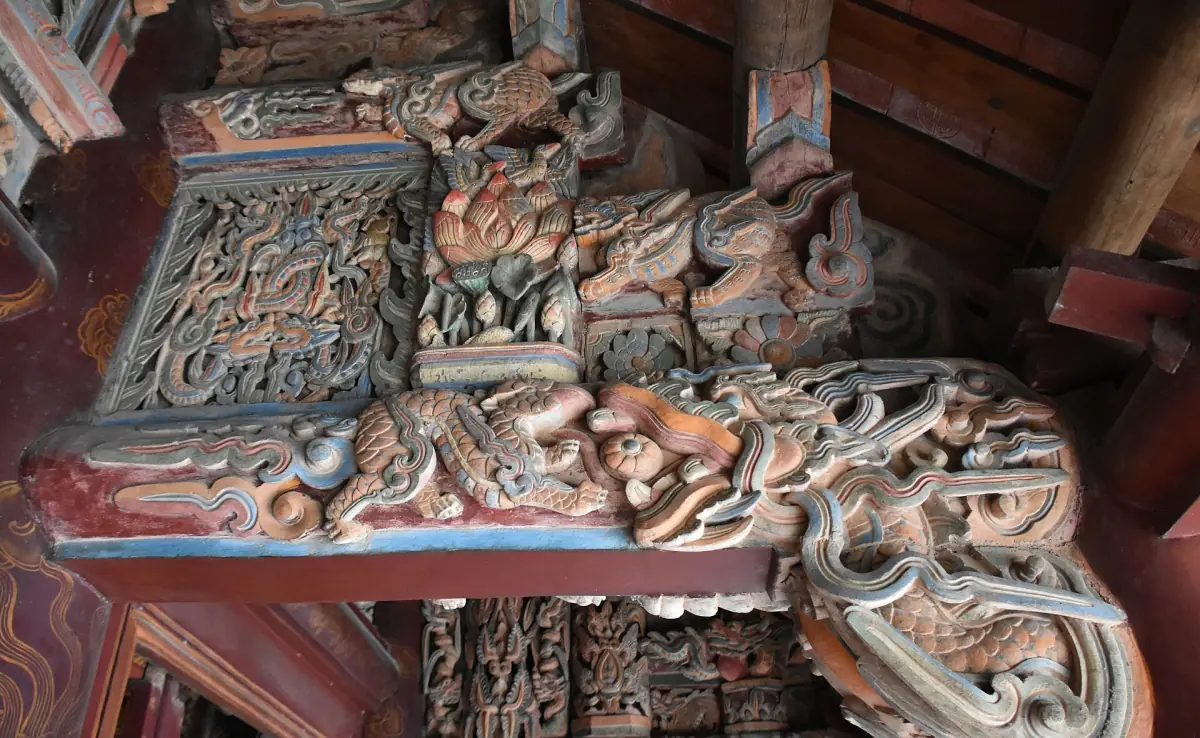
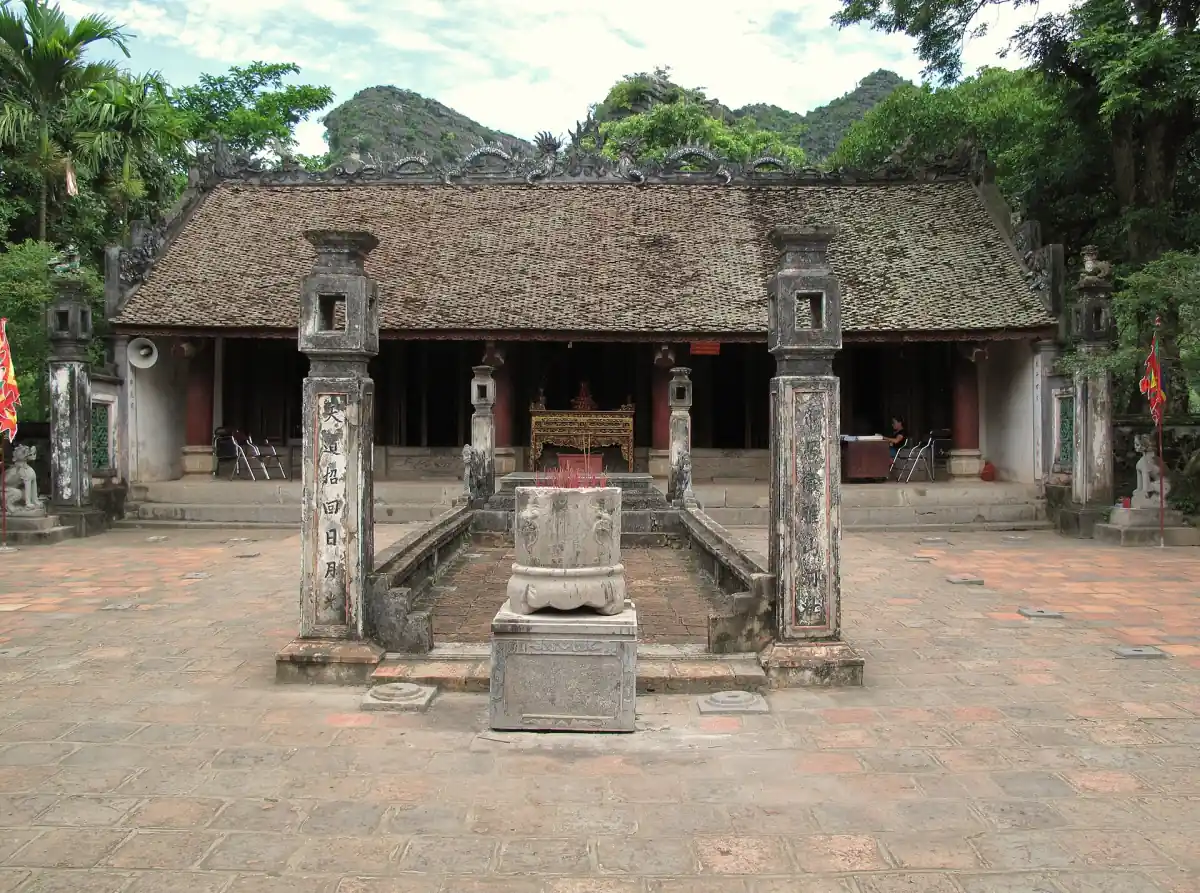
The Lê temple remembers Lê Đại Hành, Dương Vân Nga and Lê Long Đĩnh in its inner sanctuary. Seeing those names together helps connect the political chronology with the site’s religious memory. The temple is a place to consider how later generations honoured the earlier court, rather than treating its surviving structure as a room used unchanged by the original rulers.
Visit the ancient capital
This trip includes a visit to the ancient capital of Hoa Lu.
Hand-picked tours, booked through GetYourGuide. Prices are indicative starting prices in US dollars (as of October 2026). Tap a tour for live availability and the current price in your currency.
Visit the ancient-capital landscape
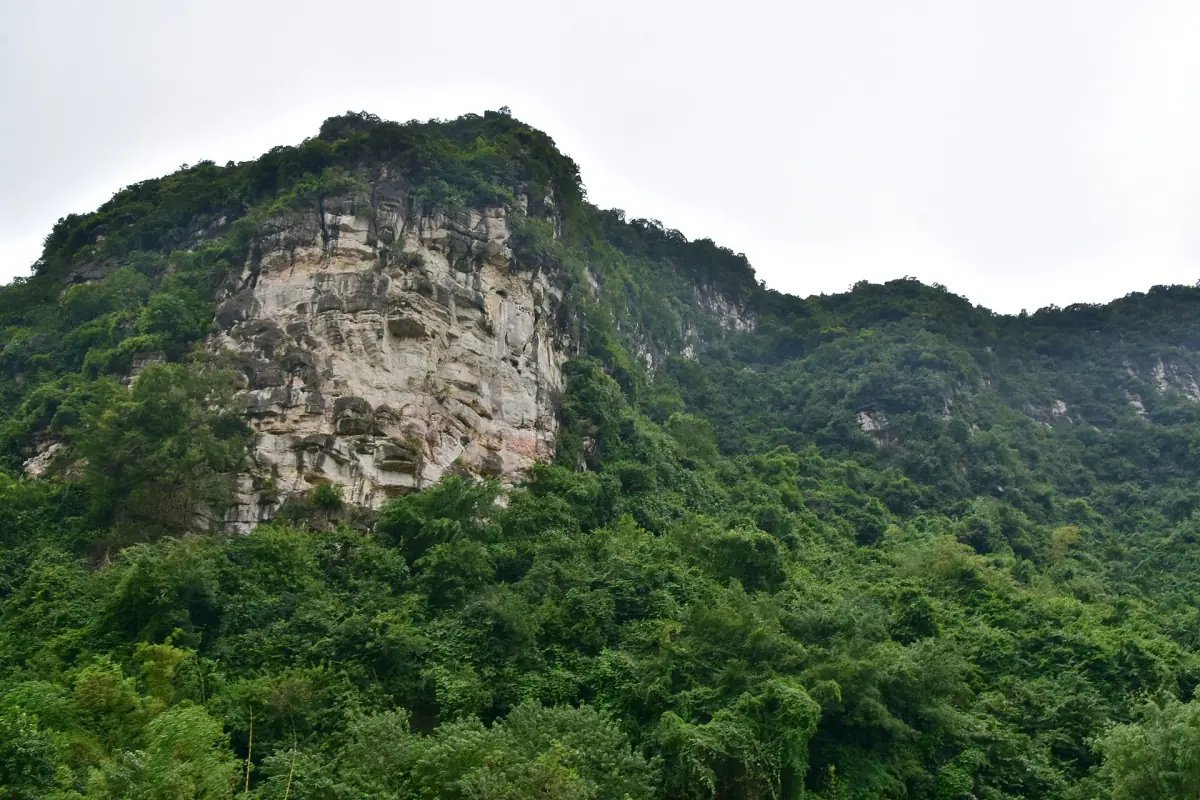
An excursion with an English-speaking guide and local pickup brings the historic capital into a wider sightseeing day.
The move to Thăng Long in 1010
Lý Thái Tổ moved the capital to Thăng Long, present-day Hanoi, in 1010. The move is the central turning point for understanding Hoa Lu: the old capital remained important to memory even after the political centre changed. A visit can therefore follow two questions at once, how the early capital worked and how later generations chose to remember it.
The distinction is useful when choosing an excursion. A day visit can introduce the ancient-capital landscape without being a specialist archaeological programme. The selected outing includes the ancient capital, an English-speaking guide and transport, with hotel or homestay pickup in the stated local areas. See day excursions for the wider choice, and decide how much of the day you want to give to historical explanation.
Hoa Lu citadel and the Thành Dền excavations
The landscape provided natural limestone barriers around the old capital’s inner and outer defensive areas. Archaeology also shows constructed defences. The cultural administration’s report dated 10 December 2025 describes investigations at the Thành Dền wall and ditch from 15 March to 30 June 2025. The work covered 600 square metres and recorded tenth-century fortifications with plant layers, wooden reinforcement and piles on soft ground.
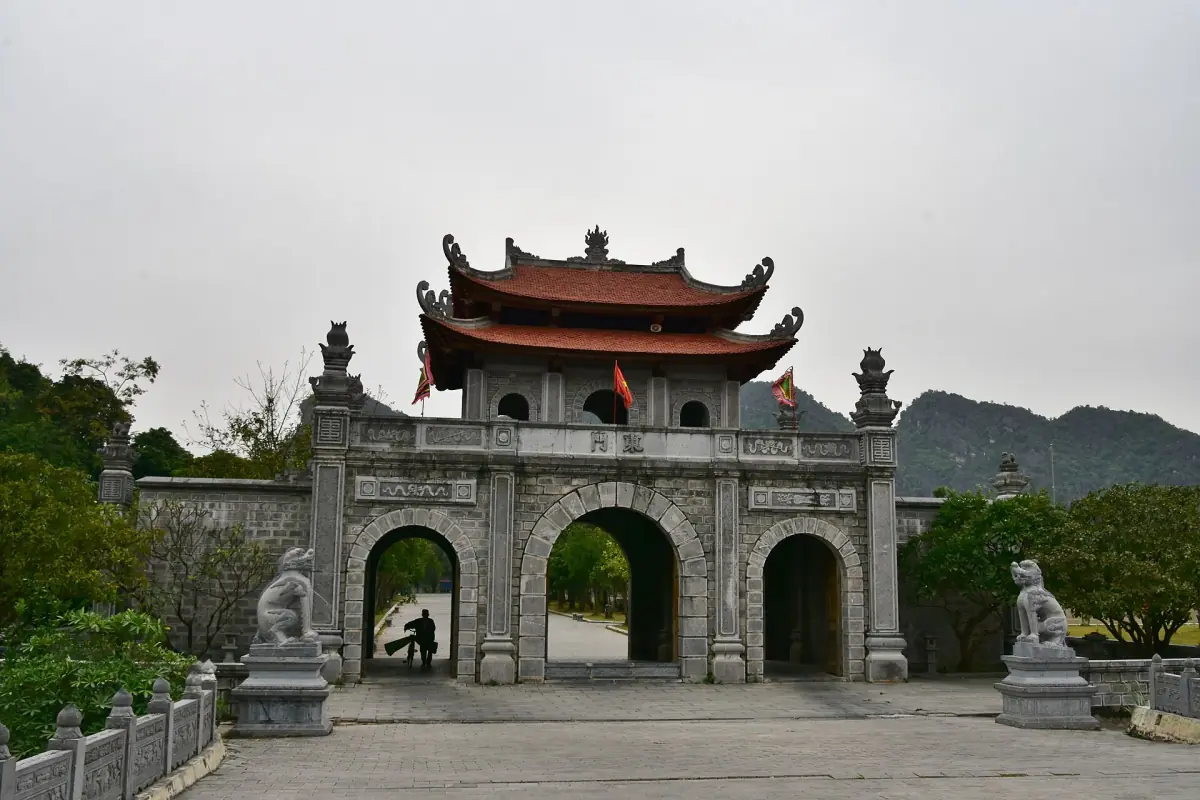
These findings help explain how built defences and natural terrain worked together. They are a historical context for the landscape, rather than an itinerary through an open excavation. Keep your visit to the areas receiving visitors and treat signs and local access instructions as the boundary of the route. A photograph of a modern temple gate and an excavated wall section answer different questions about the same historic place.
Later temples, memorials and the Hoa Lu festival
The Đinh and Lê temples belong to the continuing life of the former capital after the court’s departure. At Mã Yên, the Đinh memorial is associated with the mountain, while the Lê grave is south at its foot. These monuments extend the geography of remembrance beyond a single courtyard. They should be read as commemorative places, with traditions around royal burial kept distinct from archaeological conclusions.
The Hoa Lu festival is also known as the Trường Yên festival. The announcement of 17 March 2026 set that year’s main festival for 25 to 27 April 2026. Water processions, offerings and royal remembrance are part of the festival’s cultural setting. Keep that dated programme separate from an ordinary temple visit; a day excursion is chosen for its sightseeing route, rather than for an assumed festival event.
Historic capital and modern place names
Administrative names changed in 2025. Hoa Lư city came into effect on 1 January 2025; the new local ward administrations began operating on 1 July 2025. The historical monument is now in Tây Hoa Lư, while older descriptions use Trường Yên. Use the exact monument name when arranging travel, so a broad administrative label does not replace the destination.
Phố cổ Hoa Lư is a recreated cultural and commercial quarter beside Kỳ Lân Lake at a separate location. Its reference to older culture is different from the archaeological history of the capital. The lakeside-quarter page explains that distinction, and the admission guide helps turn the historical overview into a practical temple visit.

Questions about your visit
When did Hoa Lu become the capital?
Đinh Bộ Lĩnh chose Hoa Lư as the capital of Đại Cồ Việt in 968.
When did the capital move?
Lý Thái Tổ moved the capital to Thăng Long in 1010.
Is the Hoa Lu festival separate from the Trường Yên festival?
They are names for the same festival.