
Understanding a Hoa Lu temple visit
The Hoa Lu temple area commemorates rulers associated with Đại Cồ Việt, the state whose capital Đinh Bộ Lĩnh established here in 968. The buildings seen today belong to later layers of remembrance. Approach the site as a historic landscape with temples and surviving traces of the citadel, rather than expecting an intact royal palace from the tenth century. That distinction makes the courtyards and shrines easier to understand on their own terms.
The historic site is in Tây Hoa Lư. Older addresses use Trường Yên, while Phố cổ Hoa Lư names a separate recreated quarter beside Kỳ Lân Lake. Give your driver the temple names and the ancient-capital destination. The arrival guide explains this address distinction; the history guide puts the rulers into chronological order.
Đinh Tiên Hoàng and the king Dinh temple
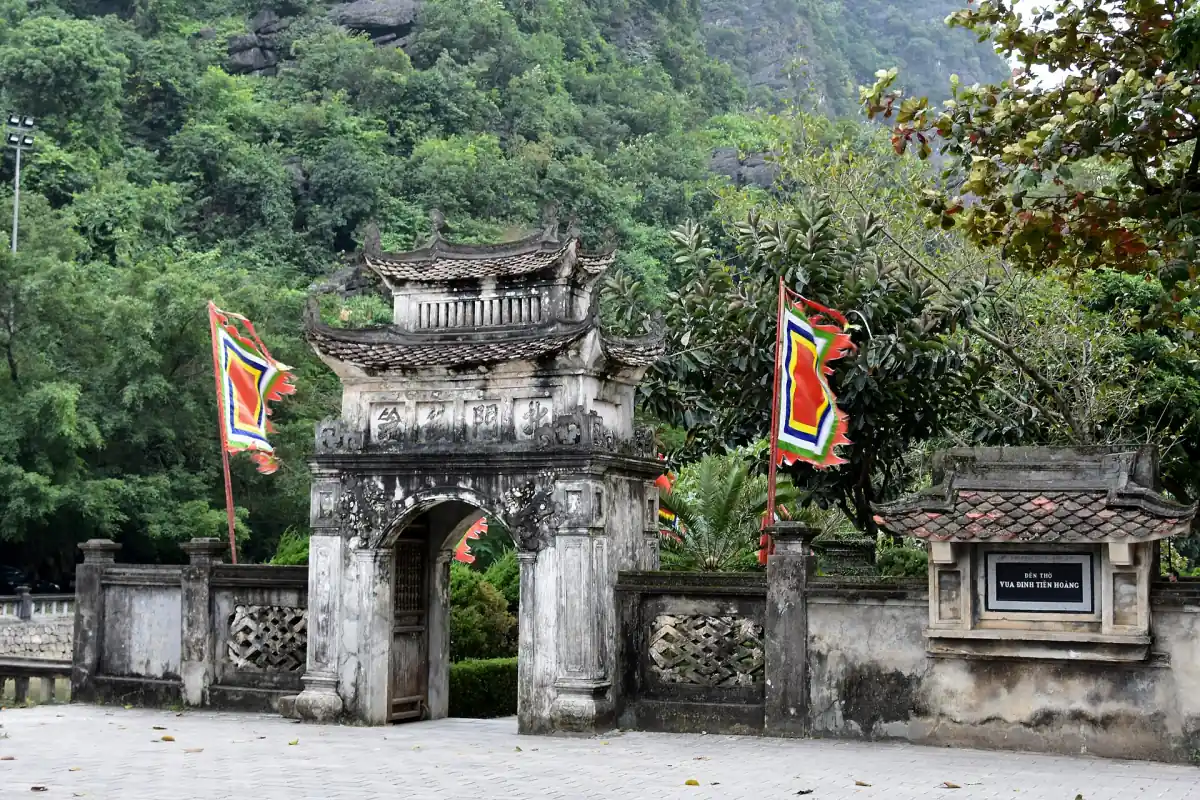
The temple of Đinh Tiên Hoàng stands at the foot of Mã Yên. A tourism-administration account published on 27 December 2016 describes an east-facing reconstruction during the seventeenth-century Later Lê period and further work in 1898. These dates help separate the king being commemorated from the building history. Later Lê architecture belongs to a different period from the Early Lê dynasty associated with the ancient capital.
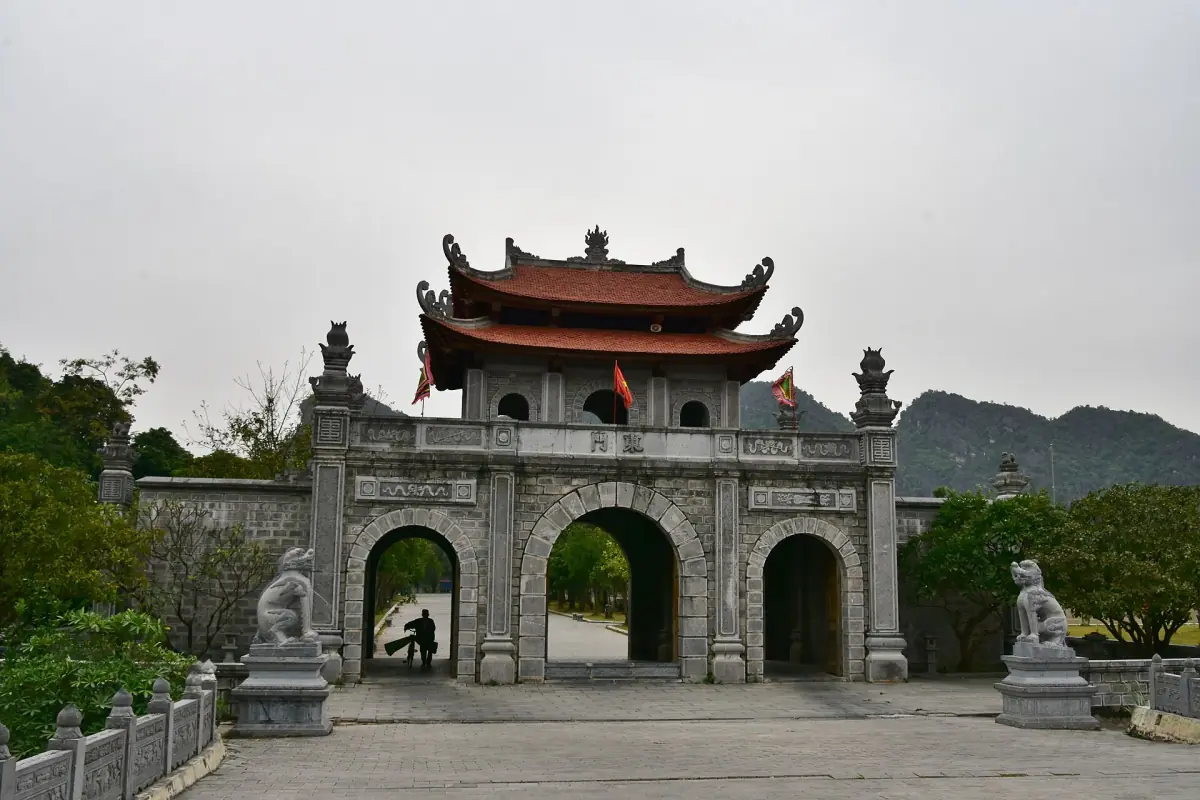
Look at the sequence of portals and courtyards before concentrating on individual objects. The stone Long Sàng is among the elements described at the Đinh temple. Allow the architecture to frame the visit: the relationship between entrance, open court and inner worship space matters as much as a close photograph of a carving. Follow signs around religious spaces and leave room for people who have come to worship.
Visit the temples
This trip from Ninh Binh includes ancient capital admission.
Hand-picked tours, booked through GetYourGuide. Prices are indicative starting prices in US dollars (as of October 2026). Tap a tour for live availability and the current price in your currency.
Excursions including Hoa Lu temple admission
A guided visit from Ninh Binh combines the ancient capital with arranged transport and included Hoa Lu entry.
Lê Đại Hành, Dương Vân Nga and temple architecture
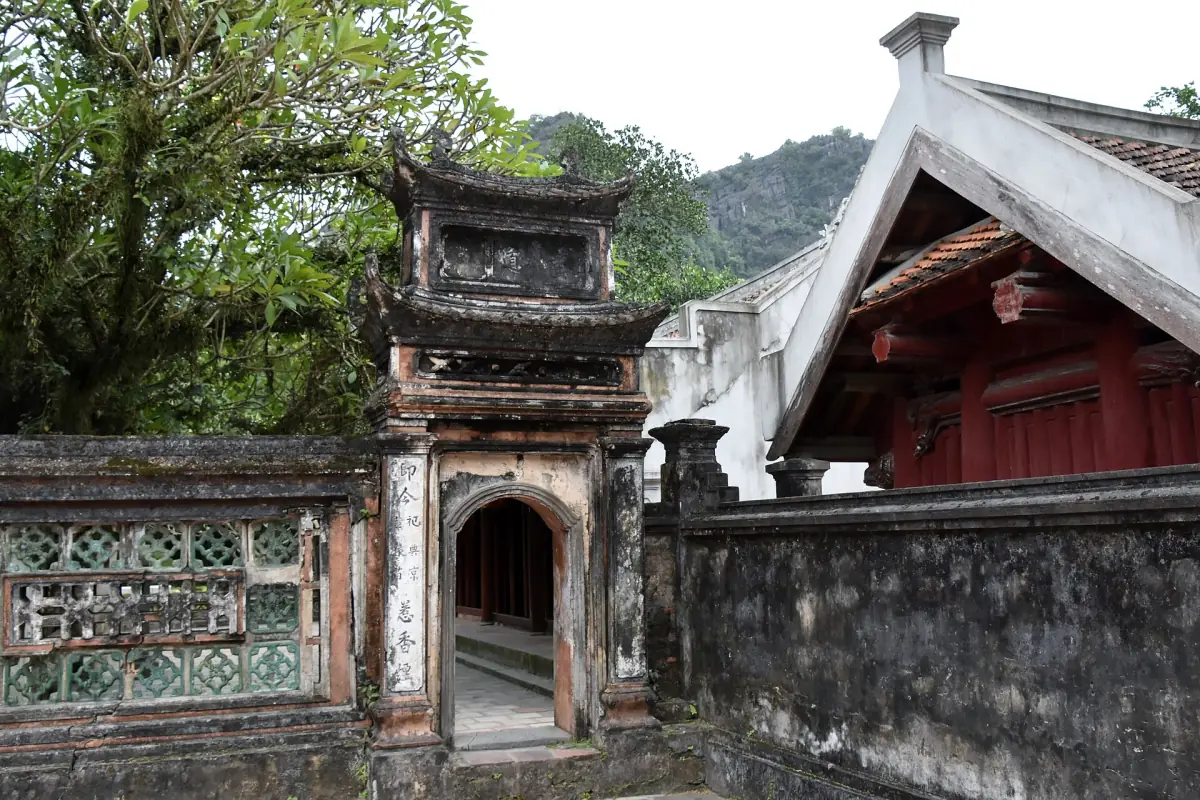
The Lê temple honours Lê Đại Hành, Dương Vân Nga and Lê Long Đĩnh in its inner sanctuary. The administration’s description of 27 December 2016 identifies the Bái đường, Thiêu hương and Chính cung as its main buildings, with wooden figures and carvings from the Later Lê period. Reading the names before entering helps distinguish the people remembered here from those associated with the neighbouring Đinh temple.
Both temples are described using the architectural term nội công ngoại quốc. For a visitor, this is a reason to notice the arrangement of buildings and courts as well as the sculpture. The Hoa Lu temples of the Dinh and Le dynasties are places of continuing remembrance; a visit focused on art should still respect the use of the sanctuaries. Ask permission before taking photographs of people, and use local signs as your guide inside.
Mã Yên and the royal memorials
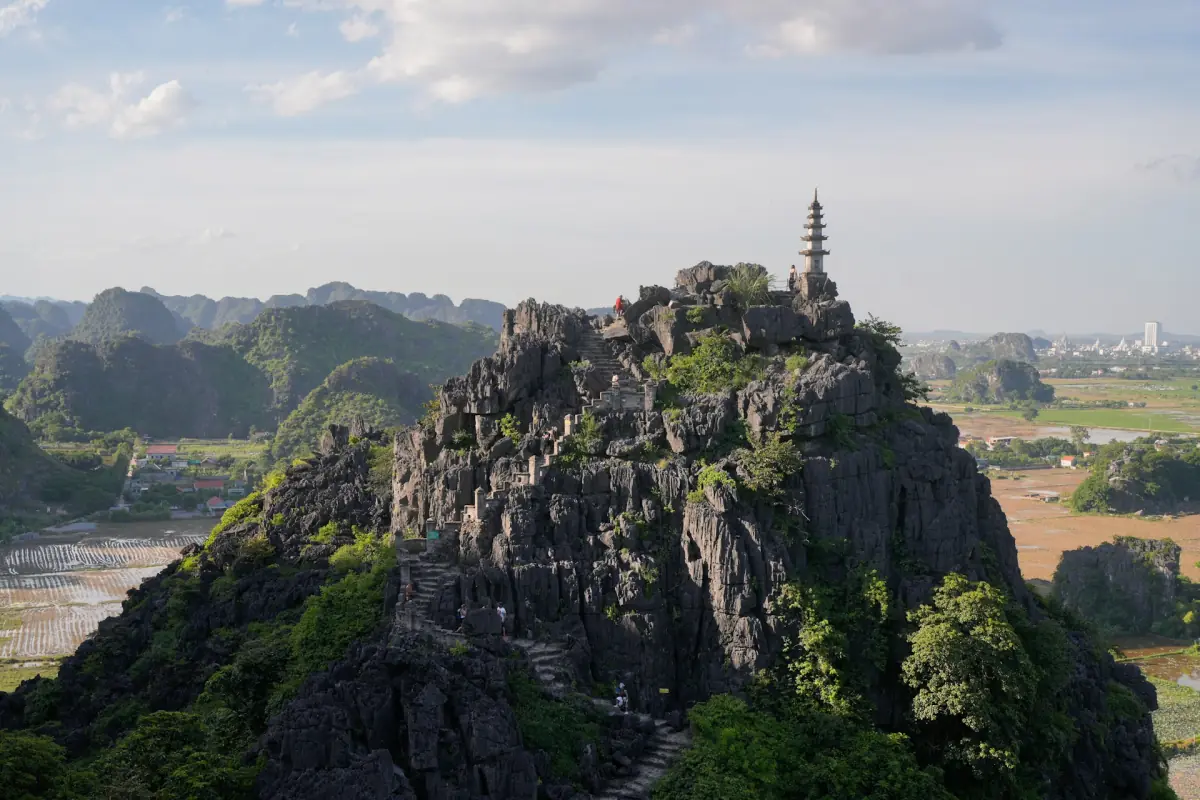
Mã Yên takes its name from its saddle-like shape. A tourism publication dated 6 December 2022 describes 265 stone steps to the Đinh memorial in the lowered part of the summit. Treat that as the published description of the stair route and ask locally about access conditions for your visit. Choose footwear that is comfortable for steps and leave the climb out if the route does not suit your mobility.
The Đinh memorial belongs on the mountain, while the Lê grave lies south at its foot. These places form part of the royal remembrance landscape. They should be understood alongside the temples, without turning accounts of burial traditions into certainty about human remains. Keep the mountain as a separate planning decision rather than assuming a temple excursion includes a guided ascent.
Admission, etiquette and choosing a visit
The official fee list dated 27 February 2026 gives an adult monument tariff of 20,000 VND. The admission page explains the listed reductions and how to distinguish a self-arranged visit from an excursion with entry included. Ask at the entrance which parts your ticket covers, particularly if you also want to approach Mã Yên. Carry a cash reserve and dress modestly as a general courtesy at religious places.
The selected excursion from Ninh Binh includes hotel or homestay pickup and return, an air-conditioned vehicle, an English-speaking guide and Hoa Lu admission. It suits travellers who want transport and explanation arranged together. Its temple entry is a concrete inclusion; the mountain remains a separate choice. For a quieter focus on architecture, decide beforehand which historical questions interest you, then use the courtyards, figures and stonework to connect those questions with what you see.
Questions about your visit
Are these the original royal palaces?
The temples are later commemorative buildings on the ancient-capital landscape.
Are both royal memorials on Mã Yên’s summit?
The Đinh memorial is on the mountain; the Lê grave lies south at its foot.
Is Phố cổ the temple district?
Phố cổ is a separate recreated cultural and commercial quarter by Kỳ Lân Lake.